
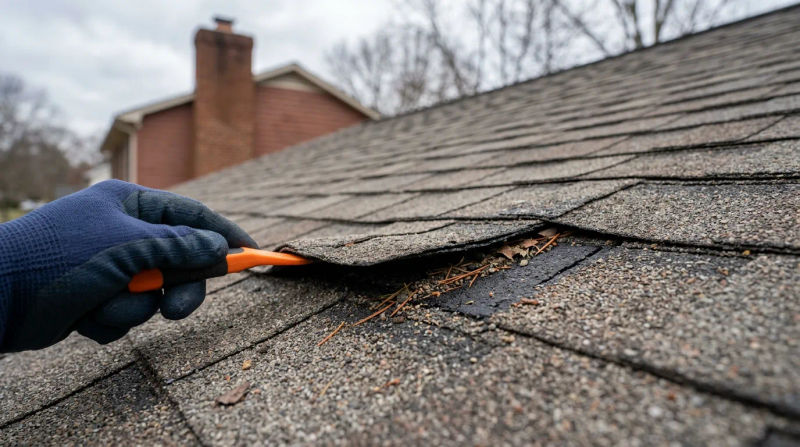
The sound of strong autumn winds rattling the windows is a familiar one for homeowners in Hopewell. While we often focus on downed tree limbs or flickering lights, the most significant impact of these seasonal gusts might be happening right above our heads. A strong storm can pass, and from the ground, your roof might look perfectly fine. However, unseen damage, particularly lifted shingles, can create a serious vulnerability as we head into the colder, wetter winter months. Ignoring these subtle warnings now can lead to costly water damage and repairs down the road.
As a roofing specialist with over a decade of experience in the Richmond area, I’ve seen countless times how a small, wind-related issue in November becomes a major leak by January. Understanding what to look for is the first step in protecting your home.
Common Signs and Symptoms
After a significant wind event, it’s wise to perform a visual inspection of your roof from the safety of the ground. Knowing how to spot lifted shingles on a roof can save you significant trouble. Grab a pair of binoculars for a closer look and watch for these seven key indicators of wind damage.
- Lifted or Curled Shingle Edges: Shingles are designed to lie flat, creating a watertight seal. If you see edges that are curled up or appear to be lifted, it means the adhesive strip underneath has failed. This is a primary symptom of wind uplift.
- Completely Missing Shingles: This is one of the most obvious Hopewell shingle blow-off signs. You might find shingles or pieces of them in your yard, on your driveway, or in your garden beds. The corresponding bare patch on the roof is a direct entry point for rain and snow.
- A Visible Crease Across a Shingle: Sometimes, the wind is strong enough to bend a shingle backward without completely tearing it off. Even if it settles back down, it will often have a horizontal crease running across it. This crease represents a fracture in the shingle’s matting, permanently weakening it and making it prone to tearing off in the next storm.
- Exposed Nail Heads: When wind gets under a shingle, it pulls upward with tremendous force. This action can loosen and pull the roofing nails, leaving the shiny nail heads exposed. Each exposed nail is a potential pinhole leak waiting to happen.
- Excessive Granules in Gutters: Take a look at your gutters and downspout splash blocks. A sudden accumulation of the sandpaper-like granules that coat your shingles is a red flag. Strong winds can essentially “scrub” the surface of wind damaged shingles, stripping away this protective layer and accelerating their aging process.
- New Water Stains on Your Ceiling or in the Attic: The most serious of wind uplift roof symptoms after a storm are often found inside. A new, unexplained brown or yellow stain on your ceiling is a tell-tale sign of a roof leak. It’s a good practice to periodically check your attic space, especially around vents and chimneys, for signs of moisture after heavy wind and rain.
- Flapping Noises During Windy Conditions: If you can hear a “chattering” or flapping sound coming from your roof during a storm, it’s a clear indication that shingles are loose and actively being lifted by the wind. This is an urgent sign that requires immediate attention.
What Causes This Problem
Understanding why shingles lift and blow off involves a bit of physics and an appreciation for your roof's components. The primary culprit is a phenomenon known as wind uplift.
As wind flows over the peak of a roof, it creates an area of negative pressure, much like the top of an airplane wing. This pressure differential creates a suction force that pulls upwards on the shingles. If the shingle’s adhesive seal is weak or the fasteners are improperly installed, this force can be strong enough to break the seal and lift the shingle.
Several factors contribute to this vulnerability:
- Adhesive Seal Failure: Each shingle has a thermally activated asphalt sealant strip. Over time, this strip can become brittle and lose its tackiness. The repeated fall wind gusts common in Hopewell can test these seals year after year, eventually causing them to fail.
- Improper Fastening: Our technicians frequently find that blow-offs are related to installation errors. If nails are placed too high on the shingle (above the designated nail line), they only secure that single shingle instead of the one above it as well. This dramatically reduces a roof’s wind resistance.
- Age and Exposure: Roofing materials naturally degrade over time due to UV exposure and thermal cycling. An older roof is simply more brittle and less able to flex under wind load. Many of the charming 1940s-era Cape Cods and bungalows in Hopewell have steep gable roofs. While aesthetically pleasing, these steep pitches can catch the wind like a sail, putting immense stress on aging shingles.
When to Call a Professional
While it may be tempting to climb up and patch a single missing shingle yourself, working on a roof is inherently dangerous. This is especially true for the steep roofs characteristic of many older Hopewell homes. A fall can result in serious injury.
Beyond the safety risks, a professional assessment is crucial because the visible damage might only be part of the story. What looks like one lifted shingle could be a sign of a widespread sealant failure across an entire section of the roof. Walking on wind damaged shingles can cause further cracking and granule loss, inadvertently making the problem worse.
When experienced professionals conduct an inspection, they follow a standardized process to ensure nothing is missed. Our crews are trained to manually check sealant strips, inspect for improper nailing patterns, and identify subtle creasing that’s invisible from the ground. We can determine if a simple repair is sufficient or if a larger section is compromised, preventing you from facing the same issue again after the next storm. An expert repair ensures the correct materials are used and installed according to manufacturer specifications, protecting your roof’s longevity.
Conclusion
Your roof is your home’s first line of defense against the elements. As winter approaches, taking a proactive approach to its health is one of the smartest investments you can make. Keep an eye out for the common signs of wind damage: lifted edges, missing pieces, visible creases, and granules in your gutters.
Addressing these issues in the fall, before the freezing temperatures and persistent moisture of winter set in, can prevent small vulnerabilities from escalating into major leaks, wood rot, and interior damage. Don't wait for a drip in the ceiling to tell you there's a problem.
If you notice any of these signs, contact a local roofing professional for an inspection.