
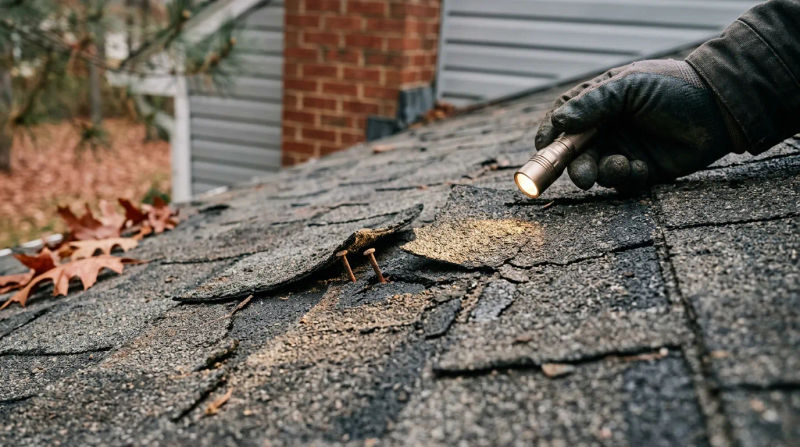
You’re out in the yard, taking advantage of a crisp November afternoon to clear the gutters before winter truly sets in. As you scoop out handfuls of damp leaves, you notice something else mixed in: a dark, gritty sludge that looks like sand. Or perhaps you were pulling into your driveway and glanced up at your roof, noticing a few shingles that look slightly lifted or curled at the edges. These small observations are often the first whispers that your roof is sending a message - one that’s crucial to hear before the cold, wet Chester winter arrives.
Your roof is your home's first line of defense, and its integrity is paramount. As a roofing specialist with over a decade of experience in the Richmond area, I've seen firsthand how minor issues in the fall can become major emergencies in January. The fluctuating temperatures and late-fall rains we experience in Chester can be particularly hard on aging materials, making this the perfect time to conduct a visual inspection. Understanding the signs of failing asphalt shingles now can save you from costly, stressful mid-winter leaks.
Common Signs and Symptoms
An aging roof rarely fails all at once. It provides clues over time. Our trained crews are conditioned to spot these subtle indicators during inspections, and you can learn to recognize them, too. Here are seven common signs to look for on your asphalt shingle roof.
- Excessive Granule Loss: That gritty material you found in your gutters is composed of asphalt granules. These granules are essential; they protect the underlying shingle from UV radiation, which breaks down the asphalt. If you're wondering about roof granules in driveway what it means, it’s a clear sign that your shingles are aging and their protective layer is eroding. A few granules are normal, but handfuls are a red flag.
- Curling or Clawing Shingles: Take a look at the edges of your shingles. Are they starting to curl upwards, or is the middle of the tab buckling up? These are classic curling shingles signs Chester VA homeowners often see. Curling is typically caused by moisture absorption and heat from the attic, while clawing (buckling in the middle) indicates the shingle is shrinking with age. Both expose the underlying layers to the elements.
- Cracked Shingles: Visible cracks are a serious symptom. These can be faint lines or significant splits. Temperature fluctuations are a primary cause of asphalt shingles cracking in cold weather. As shingles age, they lose their flexibility. The expansion and contraction during a Virginia freeze-thaw cycle can cause them to crack, creating a direct path for water to seep through to the underlayment.
- Bald Spots or Missing Shingles: This is one of the more obvious signs. High winds can lift and tear off shingles, especially if their sealant strips have failed with age. This leaves your roof's underlayment and decking exposed to rain, snow, and ice. A single missing shingle might seem minor, but it's a breach in your roof's armor.
- Dark Streaks or Algae Growth: While the dark streaks caused by blue-green algae (Gloeocapsa magma) are primarily a cosmetic issue, they can indicate that your shingles are retaining moisture. Over long periods, this can accelerate granule loss and the degradation of the shingle itself. It's something to monitor closely.
- Spongy or Soft Roof Deck: This requires extreme caution and is best left to a professional. If you are safely able to walk on your roof and notice any areas that feel soft or bouncy underfoot, it's a critical warning sign. This indicates that moisture has penetrated the shingles and underlayment and is rotting the wooden roof deck below.
- Damaged or Deteriorating Flashing: Flashing is the metal material installed around chimneys, vents, skylights, and in roof valleys. Its job is to direct water away from these vulnerable seams. If the flashing is rusted, cracked, or pulling away from the structure, it’s one of the most common sources of roof leaks.
What Causes This Problem
Understanding why these issues occur can help you appreciate the importance of a professional diagnosis. The problems we see are rarely isolated; they are usually the result of several factors working together over time.
- Age: An asphalt shingle roof typically has a lifespan of 20 to 30 years, depending on the material quality and installation. Many homes in the Chester area, particularly the classic 1960s Split-level and Ranch-style houses, may be on their second or even third roof. If your roof is approaching the two-decade mark, it’s simply reaching the end of its effective service life.
- Weather Exposure: Year after year of sun, rain, wind, and ice takes a toll. The sun's UV rays bake the oils out of the asphalt, making shingles brittle. Rain and wind erode the surface, and the freeze-thaw cycles we see in winter are especially damaging, accelerating cracking and granule loss.
- Poor Attic Ventilation: This is a hidden roof killer. An improperly ventilated attic traps super-heated air in the summer, effectively cooking your shingles from the underside. This accelerates the aging process, leading to premature curling and cracking. Conversely, in winter, it can contribute to ice dams.
- Installation Flaws: A roof is a complete system, and its longevity depends on proper installation. Issues like improperly driven nails (either overdriven or underdriven), misaligned shingles, or inadequate flashing installation can create vulnerabilities that only become apparent years later.
When to Call a Professional
While identifying these signs is a great first step, diagnosing the extent of the problem and performing a safe, effective repair requires expertise. Some minor issues, like replacing a single blown-off shingle, might seem manageable, but they often point to a larger, systemic problem like widespread sealant failure.
You should contact an experienced professional if you notice:
- Widespread issues: If you see cracking, curling, or significant granule loss across multiple areas of your roof, it indicates systemic failure, not an isolated problem.
- Any signs of water damage: Leaks, water stains on your ceiling, or soft spots on the roof deck are urgent signs that require immediate professional assessment.
- You are unsure of the cause: A qualified technician can determine if the problem is simply old shingles or a more complex issue like poor ventilation that, if left unaddressed, will damage a new roof as well.
- Safety concerns: Getting on a roof is inherently dangerous. This is especially true for the low-to-moderate pitched roofs common on Ranch-style homes, which can be deceptively tricky. Professionals have the training, safety equipment, and insurance to perform the work safely.
An organized inspection process involves more than just a walk-around. Our technicians follow a standardized checklist to evaluate every component of the roofing system, from the shingles and flashing to the decking and attic ventilation, ensuring nothing is overlooked.
Conclusion
Your roof is a complex system working silently to protect your home. Paying attention to the early warning signs - granules in the driveway, curling edges, or visible cracks - is the most powerful thing you can do to prevent a small issue from becoming a major disaster. With the Chester winter approaching, now is the time to act. A thorough inspection can identify vulnerabilities and allow for repairs or replacement to be scheduled in milder weather, ensuring your home remains safe and dry through the seasons ahead. Don't wait for a drip in the ceiling to tell you there's a problem.
If you notice any of these signs, contact a local roofing professional for an inspection.